ᐄᓅ ᐊᔨᒧᐧᐃᓐ / ᐄᔨᔨᐅᔨᒧᐧᐃᓐ

Our Language

Overview

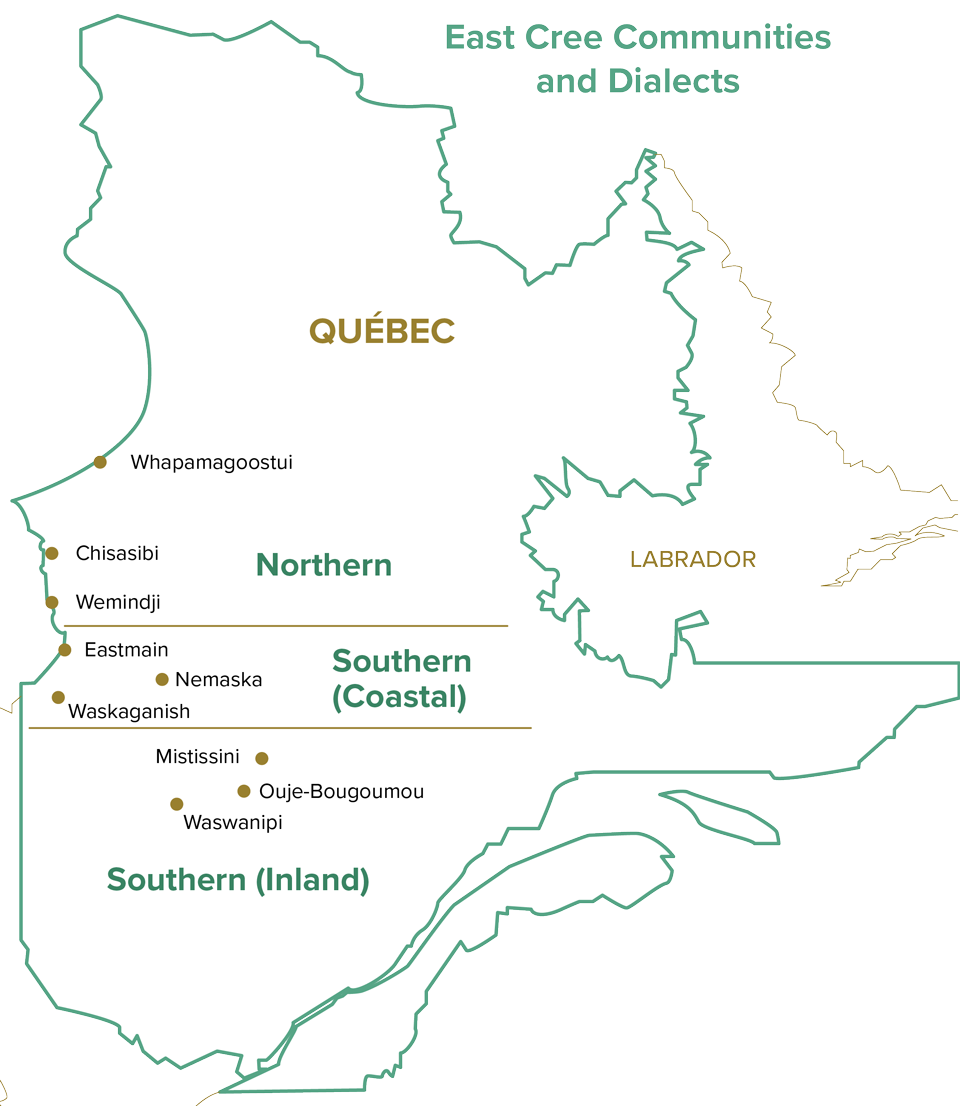
The Three Cree Dialects in Eeyou Istchee

The Cree language in Eeyou Istchee (Northern Quebec) is strong and deeply connected to the land, culture, and identity of the people. Across the territory, there are three main dialects of Eastern James Bay Cree: the Northern dialect, the Southern Coastal dialect, and the Southern Inland dialect. While speakers from all regions can understand one another, each dialect has unique features in pronunciation, vocabulary, and spelling that reflect the distinct ways of life across the Cree Nation.

Understanding these differences is important for respectful teaching, accurate language learning, and strong cultural pride in each community.

Northern Dialect

Spoken in: Whapmagoostui, Chisasibi, Wemindji

Also known as: Iyiyiu-Ayimuwin

The Northern dialect is known for maintaining traditional Cree pronunciation patterns and a distinct syllabic writing system. It uses long vowel forms and different characters compared to the Southern dialects. For example, Northern speakers often write:

  • (aa) instead of (e)
  • (paa) instead of (pe)
  • (chaa) instead of (che)
  • (maa) instead of (me)
  • (naa) instead of (ne)

Example comparison

Southern Northern Meaning
ᐯᔭᒄ ᐹᔨᒄ one (pêyak)
ᒉᒀᓐ ᒑᒀᓐ a certain thing
ᒣᒣᐱᓲᓐ ᒫᒫᐱᓲᓐ a swing

These spelling changes reflect how certain vowels are pronounced longer or more traditionally in Northern communities. The dialect also preserves more historical sound distinctions and often reflects stronger ties to coastal land-based lifestyles and seasonal practices.

Southern Coastal Dialect

Spoken in: Waskaganish, Nemaska and Eastmain (mixed dialect)

Also known as: Iiyiyuu-Ayimuwin

The Southern Coastal dialect is used in Cree communities along the James Bay coast. It follows the Southern Cree syllabic system, which uses shorter vowel symbols and slightly different characters compared to the Northern writing system. It features:

ᐁ, ᐯ, ᒉ, ᒣ, ᓀ, ᓭ, and ᔐ

This dialect also includes pronunciation differences—certain consonant sounds like “l” or “sh” may be used more often, and final sounds like ᒡ are sometimes pronounced as ᑦ , especially among Southern Coastal speakers. While ᒡ should still be used in writing (e.g., ᐄᔨᔫᒡ), this variation in pronunciation is common and accepted.

Eastmain – A Blended Dialect

Eastmain is a unique community where both Northern and Southern features are used in speech and writing. It sits on the dialect boundary, and as a result, speakers may:

  • Mix characters like and , or and in the same word
  • Use both Northern and Southern pronunciations
  • Switch between dialects depending on the context or speaker

This fluidity makes Eastmain an example of how Cree dialects naturally shift and adapt across regions.

Southern Inland Dialect

Spoken in: Mistissini, Waswanipi and Oujé-Bougoumou

Also known as: Iinuu-Ayimuwin or Iyiyuu-Ayimuwin

The Southern Inland dialect also uses the Southern Cree writing system, but with some distinct pronunciation patterns and word forms compared to the coastal dialect. For example, it tends to simplify consonant clusters, merge certain consonant sounds (such as “s” and “sh”), and use different word endings.

Inland speech reflects cultural practices rooted in forested environments, freshwater systems, and seasonal hunting, fishing, and gathering cycles.

Examples of Coastal vs. Inland pronunciation differences

Coastal Inland
ᓂᔮᔪ (niyâyu) ᓂᔮᔨᓐ (niyâyin)
ᐄᔨᔫ (Îyiyû) ᐄᓅ (Înû)
ᐄᔮᔥᑦ (Îyâsht) ᐄᓈᔥᑦ (Înâsht)

Why These Differences Matter

All three dialects of Eastern James Bay Cree are valid, respected, and deeply meaningful. While they may vary in pronunciation, vocabulary, and syllabic spelling, they are all part of one shared Cree language. Recognizing and supporting these dialect differences helps to:

Encourage accurate and inclusive language learning

Strengthen Cree identity and cultural pride

Support Cree language revitalization across communities

Prevent confusion or correction of valid regional variations

Learn More

Understanding the dialects of Eeyou Istchee is essential to fostering respectful and inclusive Cree language education. Whether you are a teacher, learner, language advocate, or community member, recognizing regional spelling systems and pronunciation patterns helps celebrate the diversity and strength of Cree identity throughout the territory.

Educators and language learners are encouraged to explore dialect features, grammar, and writing systems using trusted resources such as EastCree.org.

By deepening our understanding of these dialects, we honour the distinct voices, histories, and knowledge systems of each Cree Nation community in Eeyou Istchee.

The official site offering Cree language tools, grammar references, syllabic charts, and educational materials developed by Cree speakers and educators.

Northern Dialect Spelling Differences
Southern Dialect Spelling Differences

Learning Through the Land

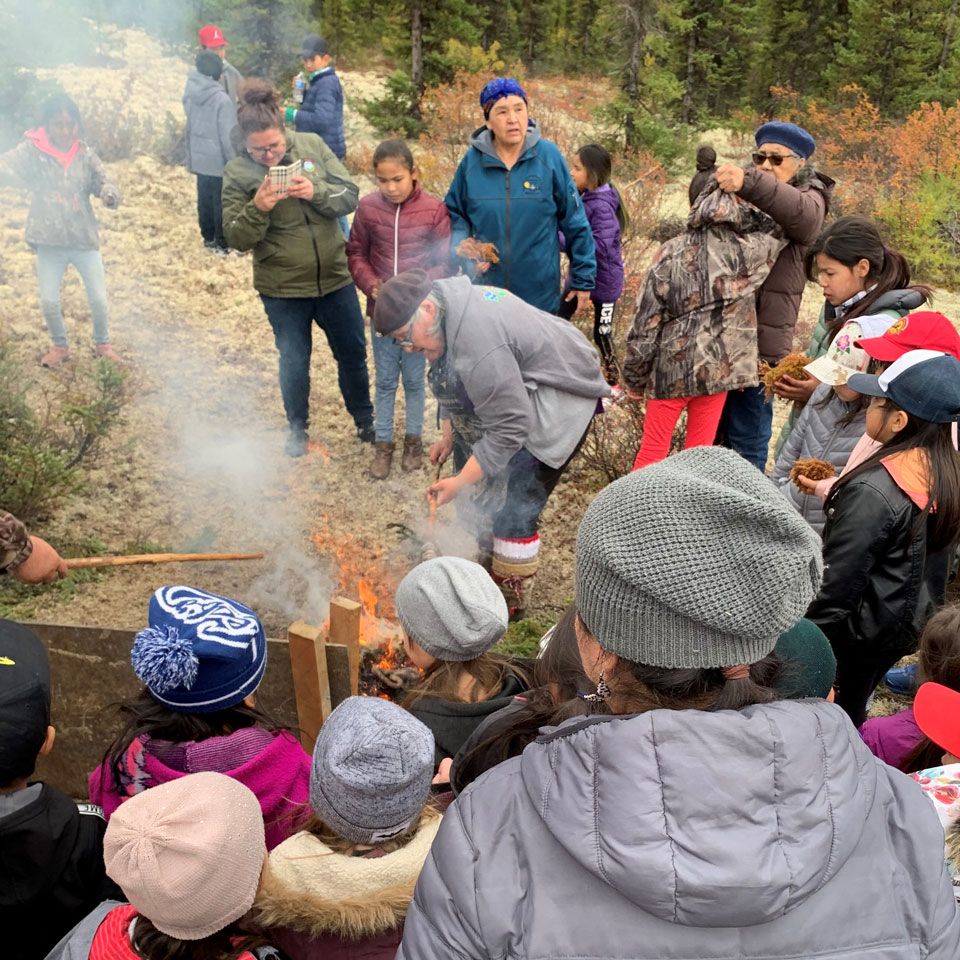
Cree is a language rooted in the land, making the language a unique and a valuable experience to learn.

This connection means that Cree language and culture are often taught together, with land-based outings scheduled throughout the school year to bring the lessons to life.

Written Language

There are two ways the Cree language may be written:

Cree Syllabics

Using a set of letters developed specifically for Cree, with letters representing sounds unique to the East Cree language

kwe

Roman Orthography

Using a set of letters originating in the Latin alphabet, which is also used in English and French

At the Cree School Board, we begin teaching syllabics to children as early as Pre-Kindergarten. Written language lessons are used in addition to land-based activities and oral traditions to strengthen the overall comprehension of Cree, and to help people use it in various ways in the future. The Cree School Board also produces many documents in Cree.

The History of Written Communication in iiyiyiu aschii

Although there is some evidence of natural materials being used to record information, such as symbols on birch bark, standardized systems of written communication were first introduced to iiyiyiu aschii by the Europeans (including syllabics, which were introduced by missionaries in the mid-1800s).

Today, written language allows us to keep our language alive, ensuring that our communications, agreements, reports, histories, and other documents can be understood and accessed by those who speak Cree.

Maintaining a strong oral tradition and uplifting our spoken traditions while also making written materials available in Cree will allow us to strengthen our language for the next generation.

As the Cree School Board, we play an important role in maintaining and strengthening the Cree language through education.

  • This starts with Cree immersion instruction, which is offered to all children at the preschool and kindergarten levels.
  • From there, students participate in Cree language and culture classes throughout elementary and secondary school.
  • We also support our Cree language teachers with resources and mentorship, and we engage with families and communities to create an environment where Cree can be heard and spoken every day.

By working together, we hope to keep the Cree language strong for many generations to come!